Before a shop is stripped out, settle one question item by item: what must leave, and what has the landlord actually agreed can stay? Retail reinstatement in Singapore depends on the lease and the agreed handover condition. An incoming tenant’s interest in your counters or display shelves is a useful conversation starter, but it does not settle your obligations.
Retention can make practical sense when useful fittings suit the next occupier. It can also create uncertainty if the parties agree in general terms and leave the details until handover. A short, specific record helps you avoid removing an accepted item or leaving something you are still responsible for clearing.
Build a remove, retain, repair and clarify record
Start with the lease, original handover documents, approved fit-out drawings and later written variations. Walk through the unit with the landlord or managing agent and mark each affected item on a plan or photograph. Use four statuses: remove, retain, repair, and clarify.
For each item, record its location, who owns it, the proposed action, the person authorised to decide, the written approval reference, and what must happen to the surrounding surfaces or services. Give unresolved items a decision date before the relevant work is booked.
For example, a reception counter marked “retain” should also state whether its integrated lighting stays, who accepts its condition, and whether any branded panels must be removed. A shelf marked “remove” should identify the required repair to fixing holes or damaged finishes. These are illustrative entries; the required result must come from your own agreed scope.
Keep “clarify” genuinely open. A contractor’s assumption, a verbal comment during a viewing or silence in an email thread is a weak basis for an irreversible removal decision. Ask for a clear answer from the party with authority to give it.
Separate ownership from permission to leave an item
The fact that you paid for a fitting does not automatically mean you can leave it behind. Equally, something inside your shop may belong to the landlord, a leasing company or a supplier. Mark those items before they are offered for sale or collected.
When a new tenant wants to take over assets, record both the asset transfer and the premises handover arrangement. Identify exactly what is accepted, any payment arrangements between the parties, the acceptance condition, and any reinstatement or repair obligation that remains with you.
A useful question for the landlord is: “If this item stays, which part of our reinstatement scope changes, and which part remains?” That is clearer than asking only whether the next tenant can use it. If the agreement is disputed or the lease wording is uncertain, obtain appropriate legal advice before relying on it.
Review the items that cross trade boundaries
Counters, illuminated signs, display systems and fixed cabinetry can involve more than furniture removal. A fitting may connect to electrical wiring, plumbing, ventilation or fire-safety systems. Put the physical item and its associated service work on the same scope record so the two do not get separated in the quotations.
Ask the relevant contractor or professional to identify what must be isolated, altered, capped, tested or reinstated and what approvals apply. Avoid instructing a clearance crew to improvise with fixed building services. Clearly assign responsibility for removal, specialist work and final making good, including where one lead contractor coordinates the work.
SCDF’s plan-approval guidance includes fire-protection system changes and alterations affecting escape routes. The applicable approval, exemption or minor-works route depends on the actual scope. A retained partition or counter should therefore be checked for its impact on the accepted layout, rather than assessed only for resale value.
Check what the retail leasing Code actually covers
The Fair Tenancy Industry Committee’s FAQs explain that the Code generally applies to qualifying retail leases of at least one year signed or renewed from 1 February 2024. Lease and renewal details matter. Premises principally used for administrative work are outside the retail definition, so office tenants should not assume the same rules apply.
One often-misunderstood provision concerns landlord pre-termination for redevelopment. Under paragraph 4.10 of the current Code, the tenant need not reinstate in that specific situation, but still has obligations to remove its belongings, leave the premises and landlord’s installations clean and safe, and repair removal damage. It is not a general waiver when a lease expires normally.
If redevelopment, early termination or a disputed handover is involved, check the applicable agreement and seek advice on your circumstances. Do not base a strip-out decision on a headline about the Code.
Price the agreed decisions and leave room for inspection
Once the record is settled, issue the same version to everyone quoting. Separate retained items from items to remove, identify specialist work and list the final finishes or repairs required. Price unresolved items as stated assumptions or options rather than letting different contractors silently make different choices.
Ask building management about work hours, noisy-work restrictions, loading access, lift protection and the inspection process. Work backwards from the agreed inspection date, with a practical allowance for corrections. Mall operating hours and your last trading day may not leave the same access window as an empty standalone unit.
If the landlord later agrees to retain something, update the scope and price before that work proceeds. Keep the approval with the revised record. This makes it easier to see what changed and prevents one team working from an outdated removal list.
Consider recovery only after the release decision
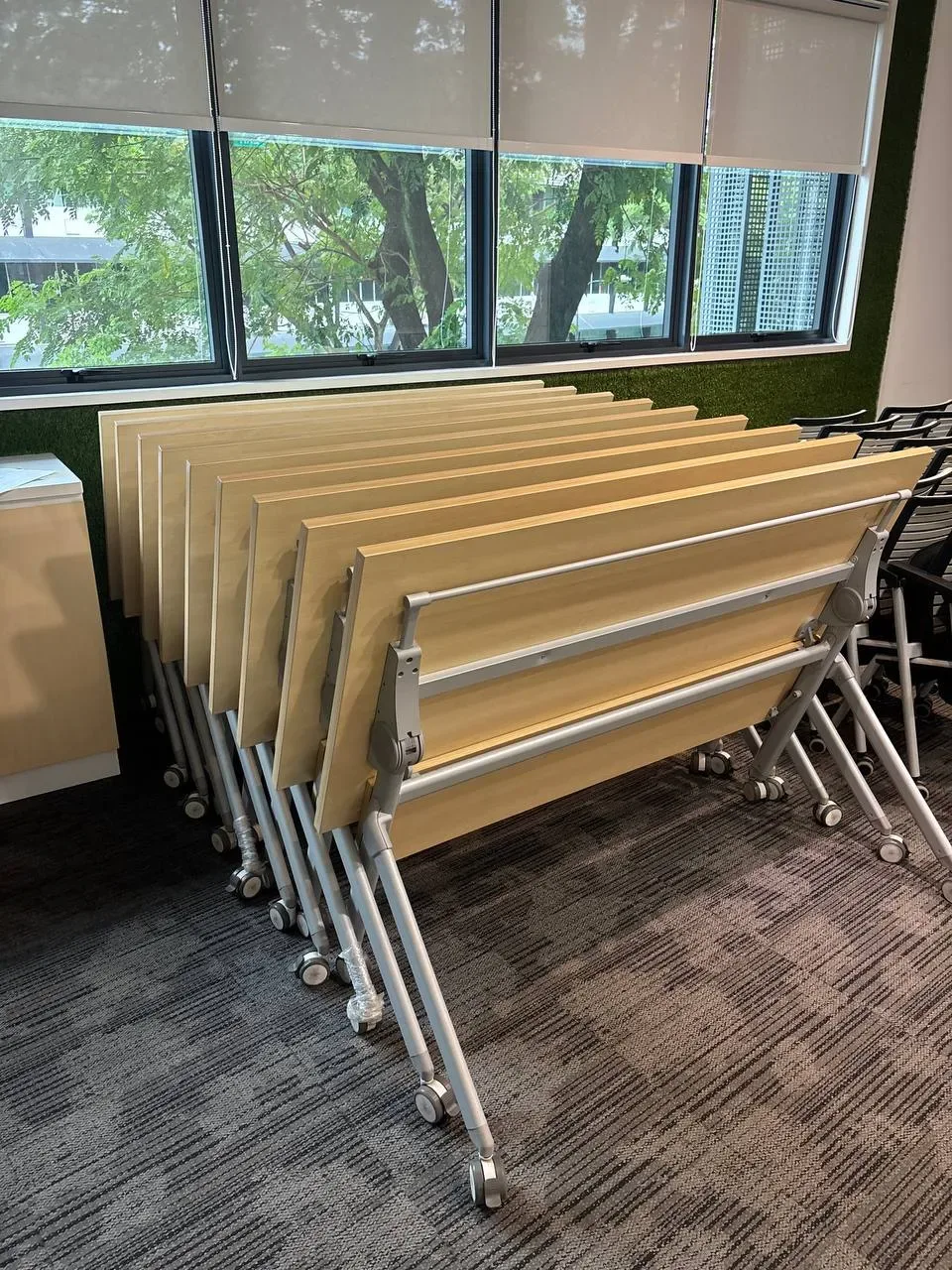
Furniture and demountable fittings with a realistic reuse market can be assessed before dismantling. Keep complete parts together and share photos, quantities, dimensions, condition and the collection deadline. Confirm ownership and release approval before accepting a buyback offer.
CPL’s Reuse & Renew service assesses eligible furniture, storage, electronics and demountable fittings for recovery. Ask CPL to review the assets at your site and confirm the collection scope. Suitability and value depend on condition, demand and resale potential; this is separate from the landlord’s acceptance of the shop’s reinstatement.
Two common shop-handover questions
Can the next tenant take over our fittings?
Potentially. Record the arrangement with the relevant parties, including the landlord, and identify the items and remaining obligations. Do this before treating them as retained in your works programme.
Does the retail leasing Code mean we can skip reinstatement?
There is no blanket waiver at ordinary lease expiry. A specific provision addresses landlord pre-termination for redevelopment. Check applicability and the actual handover terms before acting.
For reinstatement and asset recovery enquiries, send CPL your agreed handover requirements, photographs and deadline. CPL can review the scope, assess eligible assets for recovery and coordinate the required works with directly engaged contractors where needed. Your quotation will confirm the included works, responsibilities and any agreed asset-recovery offset.
Discuss your reinstatement and asset recovery needs with CPL
See how Reuse & Renew buyback works
General planning information checked on 6 October 2026. This is not legal advice; your lease, written agreements and actual works determine the required steps.