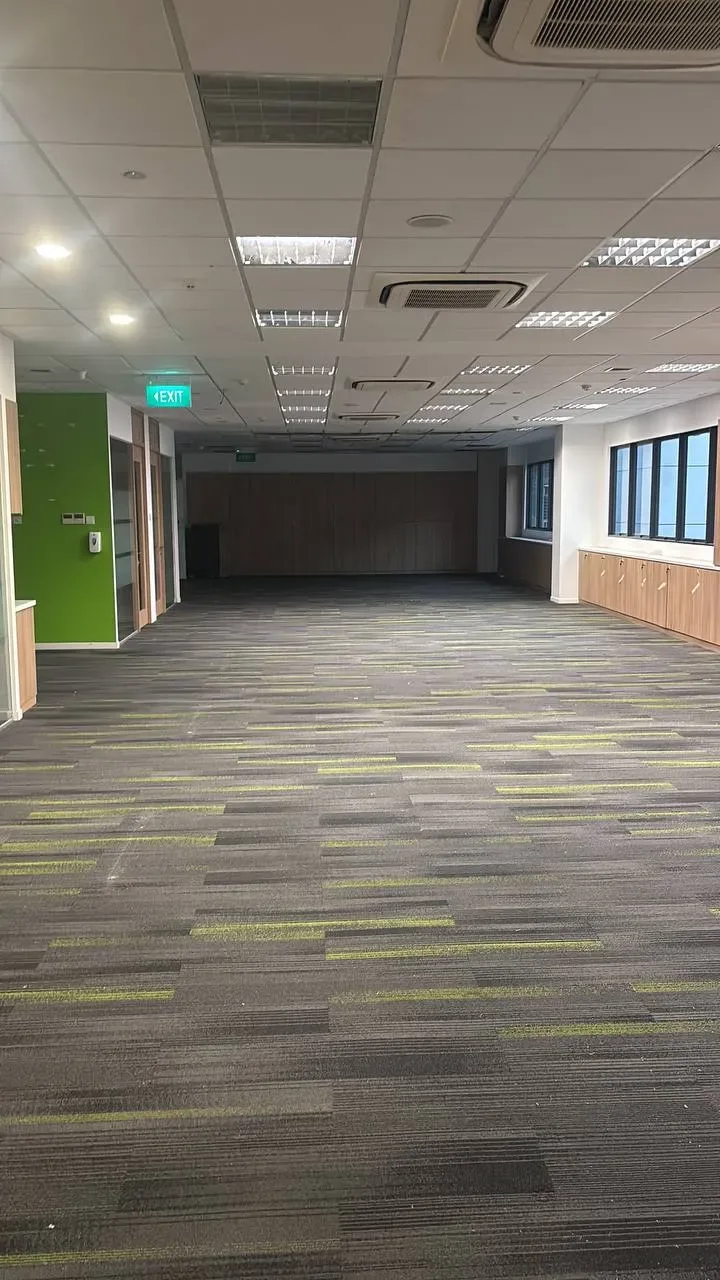
An office handover runs more smoothly when every job has a named owner and a clear place in the programme. Before booking a removal crew, confirm the lease-end condition with the landlord, decide which assets are moving or leaving, and agree who is responsible for clearance, specialist works and final inspection.
That sounds straightforward until the dates start depending on one another. Staff need their desks until Friday. The movers need a booked goods lift. The reinstatement contractor needs an empty floor. The landlord wants to inspect before the lease ends. A plan that lists only “move out” and “hand over” leaves too much sitting between those dates.
Start with the condition the landlord will accept
Bring together the tenancy agreement, original condition report, approved fit-out drawings and any later written changes. Walk the space with the landlord or managing agent where possible. Turn the discussion into a marked-up list of what must be removed, what may stay and what needs repair.
Avoid using “return to original condition” as the entire scope. Does an existing ceiling stay? Which data cables were tenant-installed? Is the reception counter being retained? An item can look useful and still need to go under the agreement. Conversely, removing something the landlord has agreed to retain creates unnecessary work.
JTC’s lease-return process illustrates the value of an early joint inspection and lease-based requirements. Its procedures apply to its own premises; your building’s agreement and managing agent remain the starting point for your project.
Give each handover decision an owner
Keep one shared action list. For every line, record the decision-maker, the person doing the work, the due date, the evidence needed and the task it unlocks. “Contractor to handle” is too vague when several firms are involved.
The tenant’s project lead should confirm the overall programme and authorise changes. The landlord or managing agent should confirm the required condition, access arrangements and acceptance process. Relocation movers need the keep-and-move inventory. The clearance team needs the remove-and-recover list. The reinstatement contractor and relevant specialists need a defined works scope and any required approvals.
Give IT and finance their own actions too. IT should release devices only after the agreed data and access controls are completed. Finance should confirm who owns the assets, whether any are leased, and how an agreed buyback payment or project credit will be recorded.
Work backwards from inspection, not just lease expiry
Ask for the landlord’s inspection slot early, then allow a realistic opportunity to correct defects before the contractual deadline. Agree the programme with the people delivering it. A small office with limited alterations and a heavily fitted floor should not inherit the same timetable.
A useful dependency sequence is: confirm scope and retained items; approve the inventory and recovery route; complete required permissions and bookings; move the assets you are keeping; clear recoverable and unwanted contents; finish the agreed reinstatement works; clean and inspect; close any outstanding items; return keys and access devices.
Some stages can overlap, but only when the site can support them. For a phased move, mark the areas still occupied and keep a separate inventory for each release. Do not assume an empty room can become a holding area if another trade needs it the following morning.
CPL’s published clearance guidance recommends booking one to two weeks before the reinstatement deadline, with earlier discussion for large sites. Treat this as a starting point for the clearance discussion, rather than a promise that every lease-exit project can be completed within that window.
Decide what happens to furniture before dismantling
Label assets by their agreed destination: move to the new office, retain with written acceptance, assess for buyback, donate with an accepting recipient, or arrange the appropriate recycling or disposal route. Keep the status provisional until the receiving party confirms.
For a buyback assessment, photograph items while they are assembled and show quantities, visible wear, dimensions and model information where available. Matching pieces, complete fittings and accessible collection arrangements give the assessor a clearer picture than a photo of a mixed pile.
Confirm whether the offer is an outright purchase or a credit against clearance, what collection includes and when the figure becomes firm. Asset recovery may reduce the net project cost, but it does not remove the need to agree the remaining works and disposal scope.
Check the building arrangements that can stop a good plan
Before fixing crew and vehicle dates, confirm permitted working hours, noisy-work windows, lift and loading-bay bookings, vehicle access, common-area protection and any contractor registration or deposits. Keep the approvals and contact details somewhere the site lead can reach.
Building permission and technical approvals are separate questions. Changes involving wiring, fire-protection systems or escape routes need the appropriate professional review. SCDF identifies changes to fire-protection systems and escape routes as potentially approval-sensitive. The word “reinstatement” does not itself establish an exemption. Ask your contractor to identify who will confirm the requirements for the actual work.
Also agree what happens if access is unavailable, the move runs late or an item cannot be collected as planned. A fallback collection slot or an agreed holding arrangement is more useful than discovering on the day that everyone assumed someone else had storage.
Close out with an evidence pack
Prepare dated photographs of each area, the agreed scope and variations, relevant completion or testing records, collection and asset-transfer records, and the landlord’s inspection list. Record outstanding items with an owner and completion date. Keep key, card and meter handover details where applicable.
A collection receipt shows that items left the office. It does not by itself prove that the landlord accepted the premises or that every item was reused. Keep those records distinct so the project lead, finance team and sustainability team can each trace the outcome they need.
Where CPL fits into the programme
CPL Services specialises in office clearance and asset removal, with buyback assessment through Reuse & Renew. For hacking, ceiling work, painting and full make-good works, CPL works alongside your reinstatement contractor or recommends partners. Agree the responsibility split in the proposal so nothing is left between the teams.
To start an assessment, prepare your building and unit details, handover date, landlord’s requirements, photographs and a rough asset list. That gives CPL a practical basis to discuss clearance, value recovery and coordination with the rest of your move.
Common handover questions
Is office clearance the same as reinstatement?
Clearance removes furniture, equipment and contents. Reinstatement can also require restoration of finishes and building services to the condition required by the lease. Confirm the owner of each work item in writing.
Can we leave useful furniture for the next tenant?
Only after the relevant parties agree in writing. Record the items, ownership, acceptance condition and any effect on your reinstatement obligations. Interest from an incoming tenant alone does not change your landlord’s handover requirements.
When should we arrange a furniture buyback assessment?
Before dismantling or mixing items with waste. Share photos, quantities, condition and the last available collection date early enough for valuation and access arrangements.
Useful links
CPL office reinstatement and clearance
Office reinstatement cost guide
JTC: returning premises upon lease expiry
SCDF: fire-safety plan approval
Arrange a free CPL site assessment
Planning guidance checked on 6 October 2026. Requirements depend on your lease, premises and actual works; obtain the appropriate professional advice where needed.