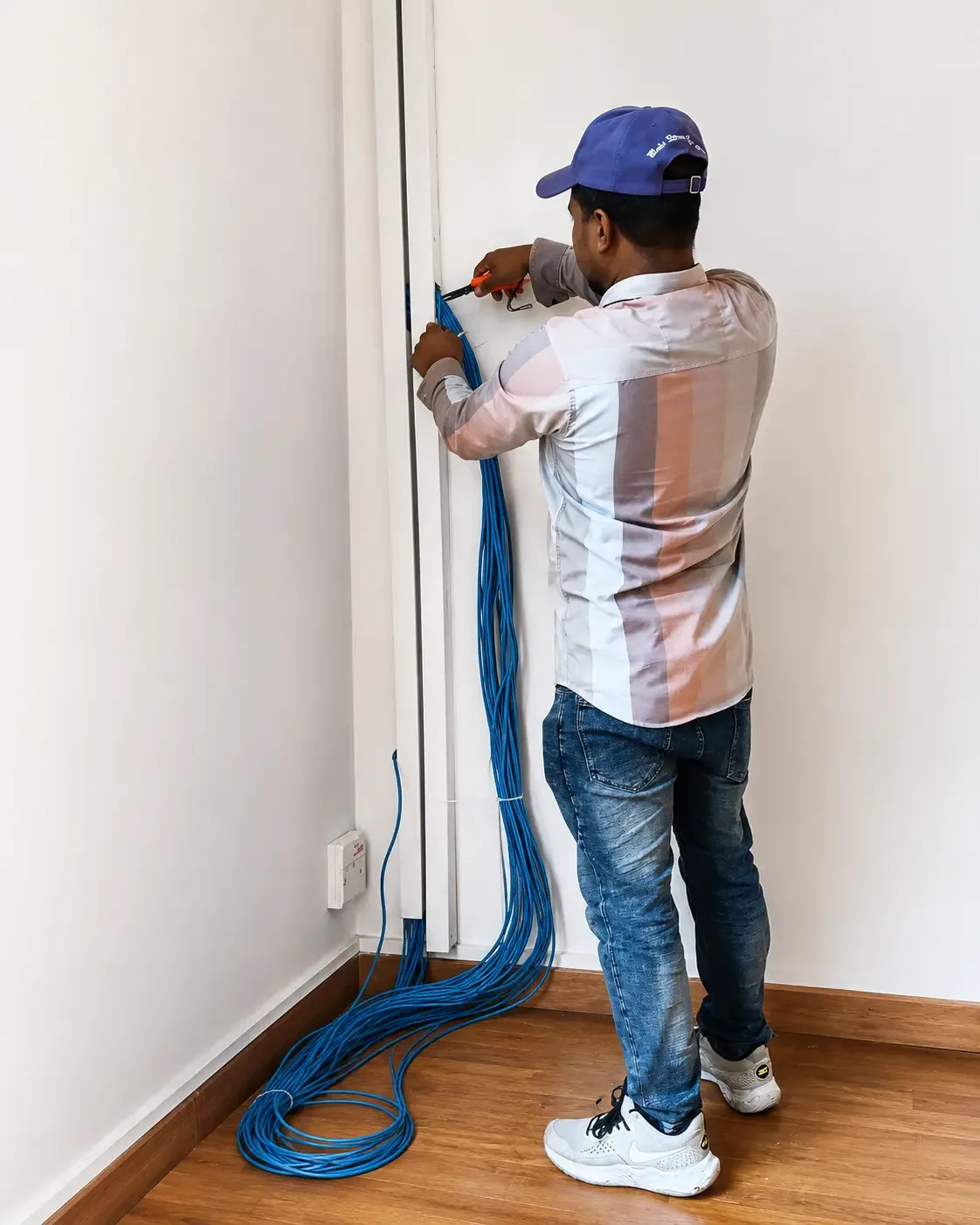
Office clearance removes furniture, equipment and contents. Full reinstatement may also involve restoring finishes and building services to the condition required by the lease. Before booking either service in Singapore, put the actual tasks in writing. A cleared floor can still need ceiling repairs, wiring work or other agreed restoration.
The distinction matters when two quotations look very different. One may cover collection and disposal, while the other includes specialist trades, making good and inspection support. Comparing their totals without separating those tasks tells you very little about what remains to be done.
Describe the work in four parts
1. Loose assets and contents
List desks, chairs, cabinets, equipment and other items that will move, be assessed for buyback or leave through an agreed disposal route. Record quantities, location and ownership. Include cupboards and storerooms; the visible workstations rarely represent every item on the floor.
2. Dismantling and fixed items
Identify systems furniture, partitions, counters, shelving and other items attached to the premises. State what must be retained or protected and what removal includes. Fixings, integrated services and the condition left behind can change the job substantially.
3. Making good
Specify the required result after removal. This could include agreed repairs to walls, floors or ceilings, repainting or other restoration. Use the landlord’s written scope and relevant drawings rather than assuming that “make good” means the same thing to everyone.
4. Building services and technical work
Separate electrical, fire-safety, air-conditioning, plumbing and other service changes. Ask which specialist will assess and carry out each task, what permissions are needed, and what testing or completion records form part of the price. Do not leave this category inside an undefined “miscellaneous works” allowance.
Ask three different permission questions
First, what has the landlord or managing agent agreed can be done? This concerns the property, the required handover condition and any retained items. Second, what must building management arrange before the team can enter and work? This can include contractor registration, permitted hours, loading access, protection and work permits under the building’s own procedures.
Third, does the actual scope require statutory submission, approval or specialist certification? That question depends on the work itself. Building access permission is not a substitute for a required authority approval, and an authority approval does not reserve your loading bay.
JTC’s published fitting-out process provides a useful example of these separate responsibilities: landowner consent, relevant authority approvals and facility-management permission to commence. It is JTC’s process, not a universal checklist for every commercial building.
Use the relevant professional to settle the technical route
BCA’s building-plan guidance explains submission through a Qualified Person. BCA also lists insignificant building works that do not require its approval. Whether your work falls within an exemption must be checked against the actual scope; other applicable requirements can still remain.
For fire safety, SCDF’s guidance distinguishes plan approval, exemptions and minor addition-and-alteration routes. Ask the relevant professional which applies before changing fire-protection systems or layouts affecting escape routes.
EMA states that electrical wiring work should be carried out or supervised by a licensed worker. Identify wiring changes and electrical disconnection separately from ordinary appliance collection, and ask who is responsible for the necessary testing and certification.
You do not need to decide the technical classification yourself. You do need a named person who will settle it, a description of what their appointment covers, and a programme that allows the required steps to happen before the dependent work.
Spot the gaps between contractors
Consider a workstation being removed from a floor box. Who releases the workstation? Who handles the relevant wiring? Who removes the desk? Who makes good the floor after it has gone? Who checks the final result against the landlord’s scope? Treat this as a responsibility check, not a set of do-it-yourself instructions.
Write the handoffs into the programme. A clearance crew should know which items are ready for collection and which are awaiting specialist release. The reinstatement contractor should know when rooms become available. If one appointment is delayed, identify the tasks that cannot safely or practically proceed.
For a phased office exit, keep released and occupied areas clearly distinguished. Make sure the agreed plan protects people, building systems and access routes throughout the work, rather than considering only the final empty condition.
Make the quotation review specific
Ask each bidder to identify included quantities, excluded trades, approval responsibilities, access assumptions, disposal arrangements and completion records. Clarify whether inspections and correction of agreed defects are included, and who will respond if the landlord identifies an outstanding item.
State how variations will be approved. If a concealed condition changes the work, the project lead should receive a description, price and programme impact before authorising it. A clear process helps the team deal with genuine changes without relying on hurried verbal instructions.
For a fuller budget comparison, use CPL’s office reinstatement cost guide. This scope check is the step that makes those price comparisons meaningful.
CPL’s role in your lease exit
CPL’s office reinstatement and clearance FAQ states that the team specialises in clearance and asset removal. For hacking, ceiling works, painting and full make-good scope, CPL works alongside your reinstatement contractor or recommends partners.
That makes the coordination brief important. Send the landlord’s requirements, drawings where available, photographs, asset quantities and deadline. Ask the proposal to show what CPL will handle, what the reinstatement contractor will handle and who coordinates each dependency. Eligible asset recovery can then be assessed without blurring the works boundary.
Quick answers
Does every reinstatement need the same approvals?
No. The work, premises and systems affected determine the route. Ask the relevant professional to confirm it alongside the building’s own conditions.
Can a clearance company remove fixed wiring?
Do not assume it is part of furniture removal. Identify the electrical work separately and check the appropriate licensed worker’s role.
Will CPL handle every make-good trade itself?
CPL’s published FAQ describes clearance and asset removal, with full make-good works coordinated alongside a reinstatement contractor or recommended partners. Confirm the actual split in your proposal.
Discuss your clearance scope with CPL
General planning guidance checked on 6 October 2026. Approval requirements depend on the actual works. Obtain the appropriate professional assessment before proceeding.