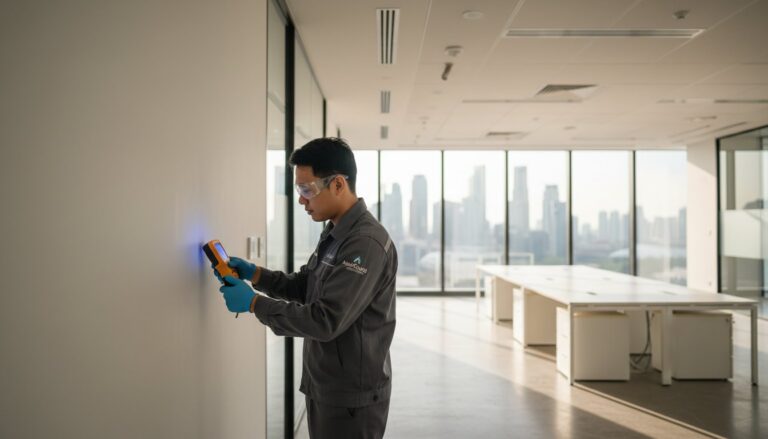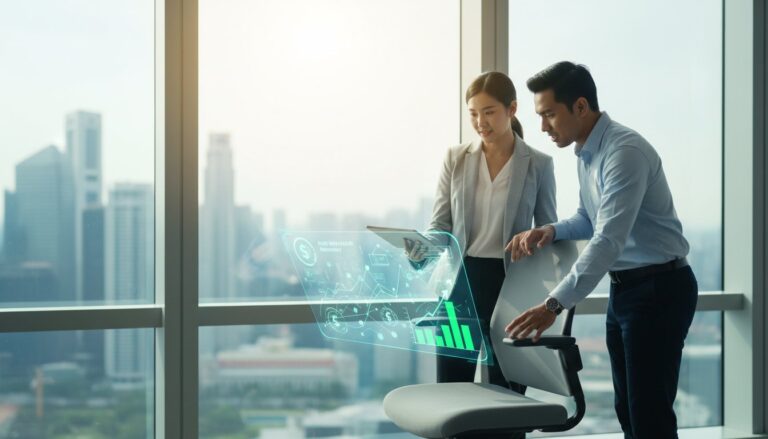

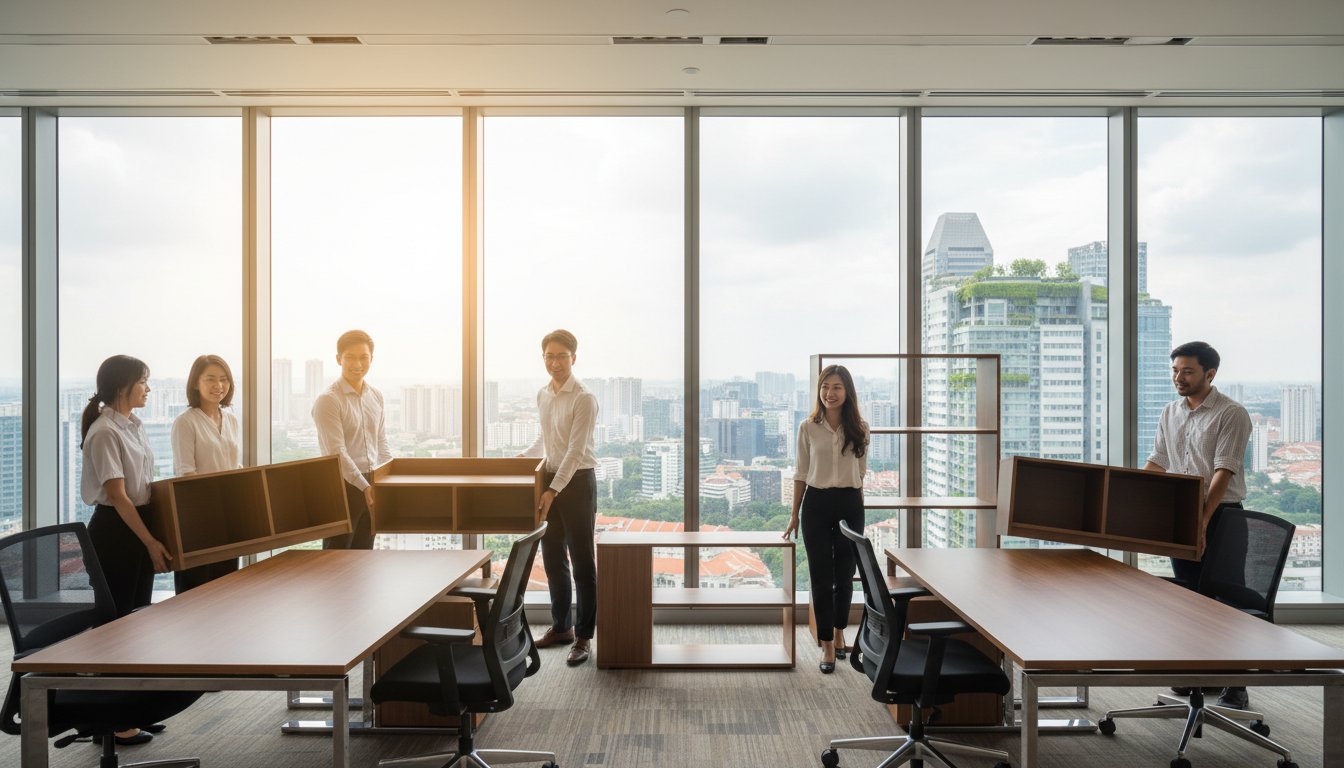
An office relocation or renovation often comes with a hidden challenge: the complex and costly task of decommissioning surplus assets. For many businesses, the traditional path of disposal is not only a drain on the budget but also feels inherently wasteful, clashing with modern corporate values. But what if this operational hurdle could be transformed into a strategic advantage? A growing number of forward-thinking companies are now tapping into the vibrant singapore second hand market, not just as a place to buy, but as a powerful tool for responsible and profitable asset management.
This guide is your roadmap to navigating this opportunity. We will explore how your business can leverage Singapore’s thriving circular economy to achieve critical ESG goals, recover significant capital from used office furniture and equipment, and enhance your brand’s reputation as a sustainability champion. Discover how to turn a logistical headache into a tangible demonstration of your company’s financial prudence and environmental commitment, transforming surplus assets into sustainable value.
The Circular Economy: Reshaping Business Practices in Singapore
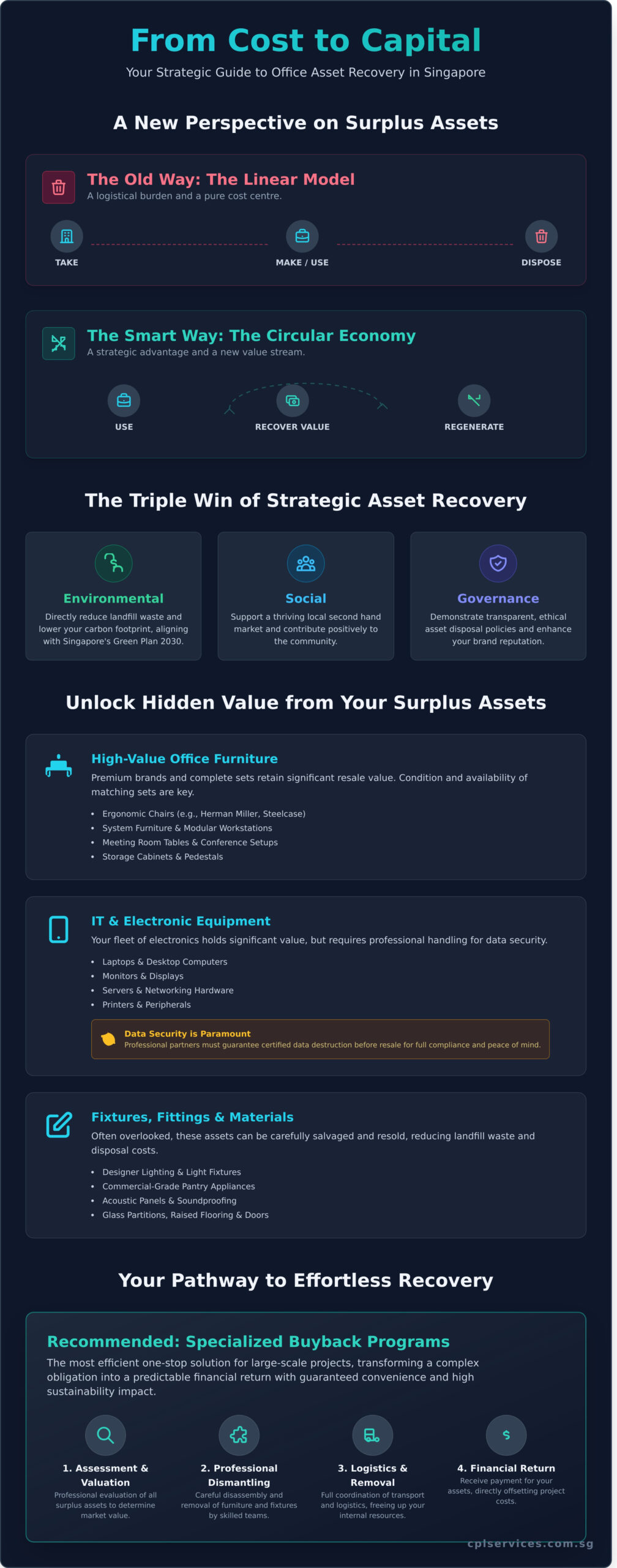
For decades, the dominant business model has been linear: take, make, and dispose. This approach is no longer sustainable, environmentally or financially. The circular economy offers a transformative alternative, designed to keep resources, products, and materials in use for as long as possible, extracting their maximum value before recovering and regenerating them at the end of their service life. This isn’t just a global trend; it is a core pillar of Singapore’s national strategy, deeply embedded within the Singapore Green Plan 2030.
Businesses are the primary engine for this economic shift. By rethinking how they manage their physical assets—from office furniture to IT equipment—companies can move from being passive consumers to active participants in a more resilient system. Asset recovery, the process of identifying, redeploying, and remarketing surplus items, is a key pillar of corporate circularity, turning potential waste into tangible value.
Why ESG Goals Make the Second Hand Market a Business Imperative
Engaging with the circular economy is a powerful way to drive Environmental, Social, and Governance (ESG) performance. Rehoming used assets directly reduces landfill waste and lowers your carbon footprint, satisfying the ‘Environmental’ pillar. Socially, it supports a thriving local ecosystem, including the singapore second hand market, while ensuring responsible decommissioning. Strong ‘Governance’ is demonstrated through transparent, ethical asset disposal policies. In an era of heightened investor and consumer scrutiny, robust ESG credentials are no longer a compliance checkbox but a significant competitive advantage.
From Cost Centre to Value Stream: A New Perspective on Surplus Assets
Traditionally, decommissioning surplus office assets has been viewed as a pure cost centre—a logistical headache involving disposal fees and write-offs. This perspective overlooks a crucial fact: used office furniture, partitions, and IT equipment retain significant residual value. The strategic practice of ‘value recovery’ transforms this liability into a new revenue stream. By professionally assessing and remarketing these items, your business can generate funds that directly offset the costs of office reinstatement, relocation, or technology upgrades, turning a mandatory expense into a smart financial opportunity.
Navigating the B2B Second Hand Market: What Can Your Business Sell?
While consumer platforms like Carousell are effective for individual sales, the commercial singapore second hand market operates on an entirely different scale. B2B transactions demand professional logistics, accurate bulk valuation, and a clear understanding of corporate needs. This professional approach is crucial during large-scale events like an office relocation, renovation, or lease exit, transforming a complex disposal process into a strategic asset recovery opportunity. Your surplus assets are not just items to be discarded; they are valuable resources waiting to be reintegrated into the circular economy.
High-Value Office Furniture
Premium assets like ergonomic chairs from brands such as Herman Miller and Steelcase consistently retain high resale value. Beyond individual pieces, complete sets of system furniture, modular workstations, meeting room tables, and storage cabinets are highly sought after. The desirability of these items hinges on their condition, brand reputation, and the availability of matching sets, which allows other businesses to furnish their spaces cost-effectively. A proper assessment can unlock significant financial returns from furniture previously considered a sunk cost.
IT and Electronic Equipment (E-Waste)
Your fleet of laptops, monitors, servers, and networking hardware represents significant recoverable value. However, the primary concern for any business is data security. Professional B2B partners guarantee certified data destruction before resale, ensuring complete compliance and peace of mind. This responsible approach aligns with national sustainability goals, such as Singapore’s Zero Waste Masterplan, which mandates proper e-waste management. Engaging specialists ensures you both maximize financial return and meet regulatory obligations securely.
Fixtures, Fittings, and Materials
Often overlooked, fixed assets hold considerable value in the second hand market. Items like designer lighting, commercial-grade pantry appliances, acoustic panels, and even glass partitions or raised flooring can be carefully salvaged and resold. A skilled reinstatement or demolition contractor is essential to dismantle these elements without damage, preserving their condition for reuse in other commercial fit-outs. This not only generates revenue but also significantly reduces landfill waste and disposal costs, contributing directly to your ESG targets.
Pathways to Asset Recovery: Your Options for Selling Used Goods
When your office lease ends or a workplace refresh is on the horizon, your surplus assets represent a strategic opportunity, not just a logistical problem. Choosing the right disposal channel can recover financial value, boost your sustainability credentials, and streamline operations. This decision is a key part of contributing to a circular economy, a goal central to Singapore’s Climate Action plan to reduce waste and enhance resource efficiency. Let’s evaluate the primary pathways available to facility and office managers.
Option 1: Specialized Buyback Programs
For maximum efficiency and minimal disruption, integrated buyback programs offer a comprehensive, one-stop solution. Partners like CPL Services manage the entire process for you: professional assessment and valuation of your assets, followed by careful dismantling and logistical coordination. This path is ideal for large-scale decommissioning or office reinstatement projects where time and internal resources are limited. The key benefit is transforming a complex obligation into a predictable financial return (S$) with guaranteed convenience and a high sustainability impact.
Option 2: Direct B2B Sales or Consignment
Alternatively, you can engage directly with the singapore second hand market by selling to other businesses, startups, or furniture dealers. This approach can potentially yield a higher margin per item, especially for unique or high-demand pieces like ergonomic chairs or designer fixtures. However, this path requires a significant investment of time and effort in marketing, price negotiation, and coordinating logistics. It is best suited for companies with the internal capacity to manage the sales process from start to finish.
Option 3: Donation and Corporate Social Responsibility (CSR)
Donating your used furniture to charities or non-profits in Singapore is an excellent way to generate positive social impact and enhance your brand’s CSR profile. This option extends the life of your assets while supporting the community. Key considerations include ensuring all items are in good, usable condition, as charities cannot afford to repair or dispose of faulty goods. While there is no direct financial return, remember to factor in potential logistics and transport costs. The value here is measured in community engagement and brand reputation.
Choosing the Right Partner for a Seamless Process
Navigating your office exit strategy involves more than just clearing a space. The right partner transforms this complex obligation into a streamlined, value-generating opportunity. While an inexperienced contractor can introduce project delays, hidden costs, and compliance risks, a strategic partner simplifies logistics, maximises asset recovery, and aligns with your corporate goals. The objective is to find a collaborator, not just a disposal service.
When vetting potential vendors, use this checklist to identify a partner who can deliver both operational excellence and strategic value:
Expertise in Valuation and Logistics
A partner with deep expertise in the Singaporean commercial landscape is non-negotiable. They must demonstrate a proven ability to accurately assess the fair market value of diverse assets, from designer furniture to specialised IT equipment. Look for in-house capabilities for professional dismantling, packing, and removal. This ensures your project is completed on time and within budget, without the risk of relying on unpredictable subcontractors.
Commitment to Sustainability and Reporting
A true partnership extends to shared values. Your chosen vendor should have a transparent environmental policy that prioritises reuse and upcycling over simple recycling. Ask if they can provide verifiable data for your company’s ESG reports, demonstrating a tangible impact. A credible firm understands the nuances of the singapore second hand market and holds certifications like bizSAFE, signalling a commitment to professional and ethical standards.
Integrated Service Offerings
The ultimate efficiency lies in an integrated solution. A partner who manages both asset recovery and office reinstatement offers a single point of contact, eliminating coordination headaches between multiple vendors. This guarantees a seamless transition from asset removal to handing the keys back to the landlord. Unifying these services saves significant time and resources, ensuring a cohesive and stress-free project from start to finish. See how CPL’s integrated approach streamlines your office exit.
The Tangible Benefits: Measuring Your Impact on the Circular Economy
Engaging with the circular economy is more than an ethical choice; it’s a strategic business decision that delivers measurable returns. By upcycling your office assets, you transform a logistical obligation into a powerful opportunity for financial gain and brand enhancement. This final step proves that in modern business, sustainability and profitability are not competing priorities—they are two sides of the same coin.
Financial Wins: Improved ROI and Reduced Costs
Moving beyond a linear “buy-use-dispose” model unlocks immediate and significant financial advantages. Instead of treating decommissioned assets as a cost, view them as a source of untapped value. The benefits are direct and quantifiable:
- Direct Revenue: Generate income by selling written-down furniture and equipment through the vibrant singapore second hand market, turning depreciated items into cash flow.
- Reduced Disposal Fees: Avoid escalating landfill and disposal costs, a considerable operational expense for any business in Singapore.
- Integrated Cost Savings: By partnering with a service that combines asset buyback with reinstatement works, you streamline logistics and avoid the cost of separate removal contractors. For example, the S$15,000 buyback value from your old workstations could directly fund a substantial portion of your new office fit-out.
Brand Enhancement: Building a Reputation for Responsibility
Your commitment to the circular economy becomes a compelling part of your brand story. This strategic advantage resonates with key audiences and differentiates you from the competition. A proactive approach to asset upcycling allows you to:
- Strengthen Your ESG Profile: Showcase tangible sustainability efforts in annual reports and marketing materials, demonstrating a clear commitment to Environmental, Social, and Governance (ESG) principles.
- Attract and Retain Top Talent: Appeal to a modern workforce that actively seeks employers with strong corporate responsibility values.
- Build Stakeholder Trust: Deepen relationships with clients and investors who increasingly prioritize partnering with sustainable and forward-thinking organisations.
- Position as an Industry Leader: Establish your brand as an innovator that understands how to align operational efficiency with environmental stewardship.
The message is clear: participating in the circular economy is not just good for the planet; it’s good for your bottom line and your brand’s future. It’s time to transform your surplus assets from a liability into a strategic advantage. Let us show you how to unlock that value.
Ready to turn your surplus into sustainable value? Partner with CPL Services to manage your office assets responsibly and profitably.
Your Next Step in Singapore’s Circular Economy
Embracing the circular economy is no longer just an option but a strategic imperative for businesses. The thriving singapore second hand market offers a powerful opportunity to transform surplus assets from liabilities into valuable revenue streams, directly contributing to both your bottom line and your ESG goals. The key to unlocking this potential lies in navigating the B2B landscape with a clear strategy and the right expertise.
Choosing the right partner is critical to maximizing value and ensuring a seamless process. As Singapore’s trusted partner in office reinstatement and asset recovery, CPL Services has a proven track record of helping businesses like yours. We are deeply committed to circular economy principles and supporting your ESG goals.
Ready to transform your surplus assets into a strategic advantage? Turn your surplus assets into sustainable value. Contact CPL Services today. Let’s build a more circular and resilient Singapore, together.
Frequently Asked Questions
How is the value of my used office furniture determined?
The value of your used office furniture is determined by a comprehensive assessment of several key factors. Our specialists evaluate the brand, model, age, and overall condition of each item. Market demand is also a crucial element; popular ergonomic chairs from brands like Herman Miller or Steelcase retain higher value. We provide a transparent valuation based on current resale prices, ensuring you receive a fair and competitive offer for your assets.
What happens to furniture that cannot be sold in the second hand market?
Items that are not suitable for the direct singapore second hand market are not treated as waste. In line with circular economy principles, we prioritise upcycling—refurbishing items for new purposes or breaking them down for parts. Materials like metal, wood, and plastic are segregated for recycling. Only as a final resort, and in full compliance with NEA guidelines, are non-recyclable components disposed of responsibly, minimizing landfill impact and maximizing resource recovery.
Can I sell used IT equipment that contains sensitive company data?
Absolutely. We understand that data security is paramount. Our process for handling used IT equipment includes certified data destruction services that comply with international standards. Before any asset is remarketed, all storage devices undergo a rigorous, multi-pass data sanitisation process. We provide a certificate of data destruction for each serialised asset, giving you complete peace of mind and auditable proof of compliance for your records.
How long does a typical office furniture buyback and clearance process take?
The timeline for a complete office buyback and clearance is tailored to your project’s scale and complexity. A standard process for a small to medium-sized office can typically be completed within 3 to 7 working days, from initial assessment to final site clearance. For larger-scale projects or those with complex logistical requirements, we develop a customised schedule in partnership with you to ensure minimal disruption to your operations and meet your handover deadlines.
Is it better for my company’s ESG goals to donate or sell our used assets?
Both options positively contribute to your ESG goals. Donating supports social objectives, while selling directly fuels the circular economy. Selling extends the life cycle of assets and generates a return, transforming a disposal cost into revenue. This approach strongly aligns with the ‘E’ (Environmental) in ESG by actively participating in the market and reducing waste. We can help you strategise a blended approach that meets both your community and environmental targets.
What kind of documentation can I get to prove our company’s sustainable disposal efforts?
We provide comprehensive documentation to support your sustainability reporting and ESG audits. This includes a detailed asset disposition report tracking each item from collection to its final destination—be it resale, recycling, or donation. You will also receive official recycling certificates for materials processed and certificates of data destruction for all IT assets. This transparent reporting provides the tangible evidence you need to validate your company’s commitment to responsible environmental stewardship.
Do you handle the removal of items from high-rise office buildings in the CBD?
Yes, we specialise in complex logistical operations, including asset removal from high-rise office buildings in Singapore’s Central Business District (CBD). Our experienced team manages all aspects, from coordinating with building management and adhering to strict loading bay schedules to ensuring the safe and efficient dismantling and transport of all items. We possess the logistical excellence and necessary equipment to execute challenging clearances smoothly, ensuring compliance with all building regulations.